
What Is the Difference Between Hajj and Umrah?
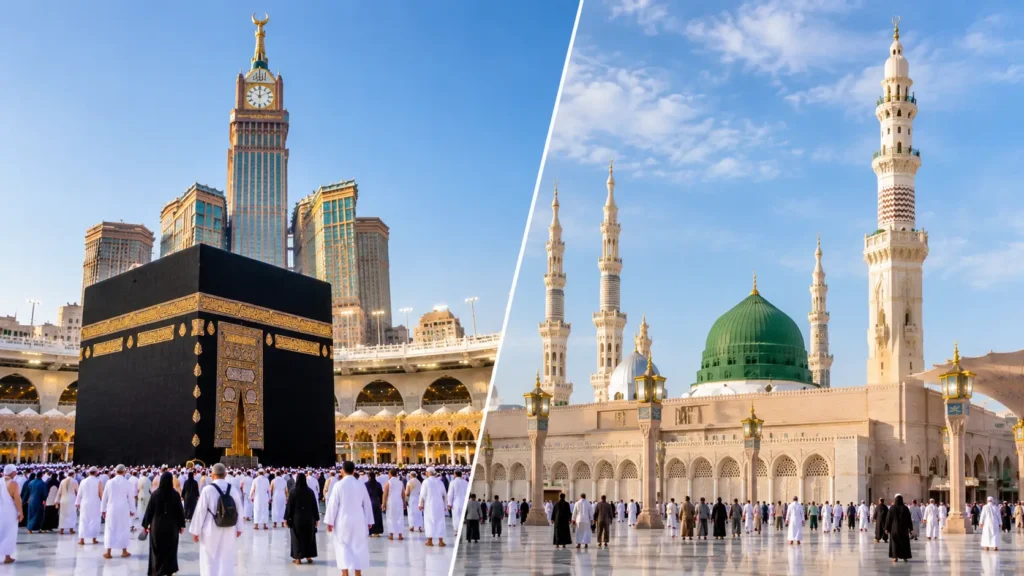
If you have never travelled to Makkah before, it’s easy to think that Hajj and Umrah are simply two names for the same pilgrimage. After all, both involve visiting the Kaaba, wearing Ihram and completing acts of worship in the holy city.
But there’s more to the difference between Hajj and Umrah than the length of the journey.
Hajj is a religious duty that eligible Muslims must fulfil once in their lifetime. Umrah is a shorter pilgrimage that offers greater flexibility over when you travel, although Islamic scholars hold different views about whether it is obligatory.
Understanding how they differ is useful, particularly if you’re planning your first pilgrimage from the UK.
Hajj vs Umrah: A Quick Comparison
Before looking at the details, here’s how the two pilgrimages compare.
What to Consider | Hajj | Umrah |
Religious status | One of Islam’s Five Pillars | Obligatory according to some scholars; strongly recommended according to others |
When it takes place | During specific days of Dhul Hijjah | Generally available throughout the year, apart from restricted periods |
Time needed for rituals | Around five to six days | Often a few hours |
Main activities | Includes Arafat, Mina, Muzdalifah, Tawaf and other rites | Tawaf, Sa’i and shaving or trimming the hair |
How often | Once fulfils the lifetime obligation | May be performed more than once |
Travel arrangements | Fixed pilgrimage dates and more extensive arrangements | More choice of dates and trip lengths |
Why Is Hajj Different from Umrah?
One of the clearest differences is the place each pilgrimage holds in Islamic practice.
Hajj is the fifth pillar of Islam. Muslims who have the means, good health and ability to travel safely are required to perform it once in their lifetime, provided they meet the relevant religious conditions.
Umrah also carries great spiritual value, but scholars do not all agree on its legal status. Some schools of Islamic thought consider it obligatory, while others regard it as a highly recommended act of worship.
Another important distinction is that completing Umrah, even several times, does not remove the obligation to perform Hajj.
When Can You Perform Hajj and Umrah?
If you’re arranging travel from Britain, the dates are one of the first things you’ll need to consider.
Hajj follows the Islamic calendar and takes place during Dhul Hijjah. Pilgrims must be present for particular rituals on specific days, so there is little flexibility in the main pilgrimage schedule.
Umrah is different. You can generally plan it for various times of the year, subject to Saudi entry and pilgrimage restrictions.
This flexibility allows UK travellers to consider school holidays, annual leave and their preferred weather conditions.
For example, some families choose December because it fits around the Christmas break, while others prefer travelling outside the busiest holiday periods.
How Do the Rituals of Hajj and Umrah Compare?
Both pilgrimages begin with the intention to worship Allah, but the activities involved are not identical.
What Happens During Umrah?
The main steps of Umrah are relatively straightforward.
Pilgrims enter Ihram before crossing the designated boundary, known as the Miqat. After arriving at Masjid al-Haram, they perform Tawaf by circling the Kaaba seven times.
They then complete Sa’i, walking seven lengths between Safa and Marwah. Finally, they shave or trim their hair to complete Umrah.
Although these rituals may take only a few hours, busy conditions or mobility needs can make the process longer.
What Happens During Hajj?
Hajj includes several of the same acts of worship, but pilgrims also travel to other sacred locations.
A central part of Hajj is standing at Arafat. Pilgrims also spend time in Muzdalifah and Mina and perform Rami, the symbolic stoning of the pillars.
The pilgrimage follows a particular sequence over several days. This is why Hajj requires more planning and physical preparation than Umrah.
Is Hajj Harder Than Umrah?
For most people, Hajj is the more demanding journey.
It involves several days of religious activities, movement between different locations and large gatherings of pilgrims. You may spend considerable time walking or waiting, often in warm weather.
Umrah is shorter, but that doesn’t necessarily make it effortless. Walking during Tawaf and Sa’i can still be tiring, particularly for older travellers or people with limited mobility.
If you’re travelling with elderly parents, it is worth considering accessible accommodation, suitable transport and enough time to rest, whichever pilgrimage you’re undertaking.
Why Do Hajj and Umrah Cost Different Amounts?
The cost of travelling from the UK depends on much more than the flight ticket.
Hajj generally involves a longer and more structured programme, with specific accommodation, transport and pilgrimage arrangements. These requirements usually make it more expensive.
With Umrah, travellers often have greater freedom to choose when to go, how long to stay and which hotel category suits their budget.
A short trip outside peak season may cost considerably less than a longer stay during Ramadan or the UK school holidays.
If you’re working out your budget, our guide to how much Umrah costs from UK explains the main expenses to consider.
For those preparing for Hajj, you can also review our Hajj package prices for 2027 to explore the available travel arrangements.
Can You Perform Umrah Instead of Hajj?
No. Umrah cannot be used as a substitute for Hajj.
If Hajj is obligatory for you, performing Umrah does not fulfil that responsibility, regardless of how many times you complete it.
You may have heard that Umrah during Ramadan carries a reward comparable to Hajj. This comes from a well-known hadith, but it refers to the reward of the worship rather than replacing the religious obligation.
Both pilgrimages have their own importance and should be understood on their own terms.
Preparing for Your First Pilgrimage from the UK
Whether you’re considering Hajj or Umrah, it helps to understand what the journey involves before making travel arrangements.
Think about your available dates, budget, accommodation needs and the amount of walking you can comfortably manage. Checking current Saudi travel requirements is equally important.
If you’re hoping to perform Umrah, explore our Umrah packages from UK to compare travel options and start planning a journey that suits your circumstances.
Questions UK Pilgrims Often Ask
Should I Perform Umrah Before Going for Hajj?
You can perform Umrah first, and many people do. It may help you become familiar with the Haram and some of the rituals, although it is not a requirement to complete Umrah separately before Hajj.
Can Hajj and Umrah Be Completed on the Same Journey?
Yes. Hajj Tamattu and Hajj Qiran are two recognised forms of pilgrimage that combine Hajj and Umrah in different ways. The rituals depend on which form is being performed.
How Much Time Should I Allow for Umrah?
The rituals themselves can often be completed in a few hours. However, your overall trip may last several days, allowing time to visit Madinah, rest and spend more time in worship.
Do Hajj and Umrah Take Place in the Same City?
Both involve Makkah and Masjid al-Haram. Hajj also requires pilgrims to visit Arafat, Mina and Muzdalifah, while the essential Umrah rituals take place in Makkah.